- Rugged Field Hardware. Zero Rip-and-Replace.
- Supported Protocols
- Key Capabilities
- Use Cases
- Architecture
Rugged Field Hardware. Zero Rip-and-Replace.
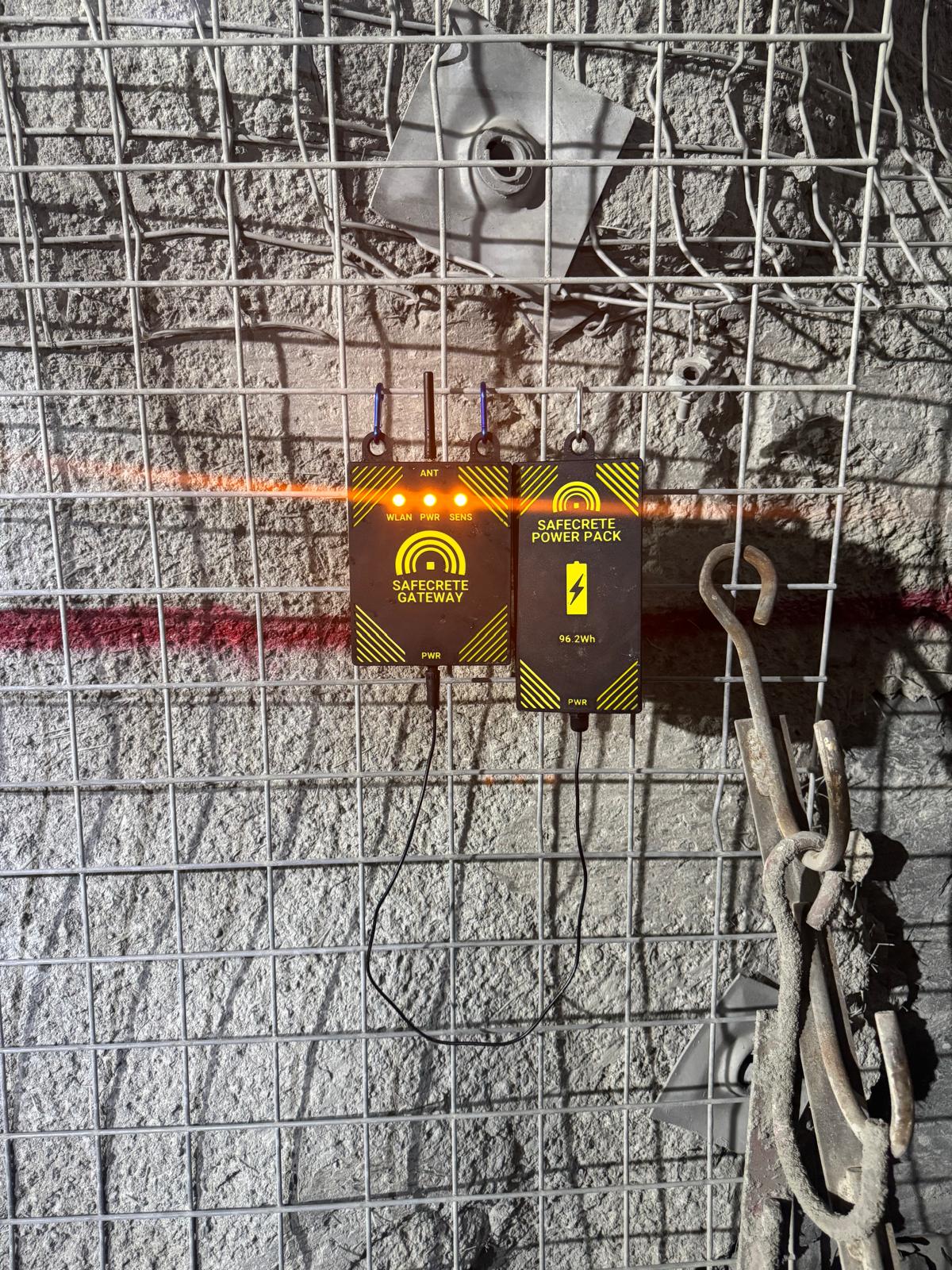
The IndustryOS IoT Gateway is industrial-grade field hardware that bridges your existing sensors, PLCs, and legacy equipment into the IndustryOS platform. It converts protocols, buffers data, and executes logic at the edge – so you connect what you already have, without replacing it.
If your site runs twenty-year-old Modbus RTUs alongside modern OPC-UA servers and a handful of BLE sensors, the Gateway handles all of them. One device, one upstream connection, every protocol your operation depends on.
Supported Protocols
| Category | Protocols |
|---|---|
| Industrial | Modbus, OPC-UA, BACnet, SNMP, KNX, OCPP |
| IoT | MQTT |
| Network | TCP/UDP Socket, CAN Bus |
| Data Sources | ODBC, REST API, FTP |
| Wireless | BLE, XMPP, Sigfox |
Key Capabilities
Protocol Conversion
The Gateway translates between industrial field protocols and the IndustryOS platform. Incoming data from any supported protocol is normalised into a unified telemetry format before transmission upstream. Downlink commands from the platform are converted back into protocol-specific instructions for your devices. No middleware, no custom integration code.
Remote Management
Configure, update, and troubleshoot every deployed gateway from the IndustryOS web interface. Push firmware updates, modify connector configurations, restart services, and review diagnostics – all without sending a technician to site. Gateway health telemetry (CPU, memory, connectivity status) is reported automatically.
Mesh Networking
Extend coverage across obstructed or multi-level sites by linking gateways in a mesh topology. Data routes automatically between nodes, so a sensor three levels underground can reach the platform through intermediate gateways. No line-of-sight requirement, no single point of failure between the edge and the cloud.
Onboard Processing
Run rule chains and data filters directly on the gateway before anything leaves site. Threshold checks, unit conversions, data aggregation, and event suppression all execute locally. This reduces upstream bandwidth, lowers latency for time-critical logic, and keeps the system responsive even when connectivity drops.
Data Persistence
Collected telemetry is buffered locally in the event of network or hardware failures. The gateway supports both in-memory queuing (minimal IO overhead) and persistent file storage (survives process restarts). Once connectivity is restored, buffered data is delivered automatically with no gaps.
Custom Connectors
When your site runs proprietary equipment or uncommon protocols, build your own connector using the customisation guide. The connector framework provides a standard interface for data ingestion and device control – you supply the protocol-specific logic.
Use Cases
Legacy System Integration
Connect decades-old Modbus PLCs, serial instruments, and proprietary controllers without replacing them. The Gateway reads their native protocols and delivers normalised data to the platform, extending the useful life of equipment that still works.
Protocol Bridging
Aggregate BACnet HVAC systems, Modbus power meters, CAN-connected mobile equipment, and BLE environmental sensors into a single, unified data stream. One gateway replaces a tangle of protocol-specific middleware.
Remote and Harsh Environments
Purpose-built for sites where conditions are hostile and access is limited. Rugged enclosures rated for underground deployment, dust, moisture, temperature extremes, and vibration. Combined with remote management, you maintain full visibility without frequent site visits.
Architecture
The IoT Gateway runs on Linux-based hardware supporting Python 3.7+. Its core components are:
- Connectors – interface with external systems (MQTT brokers, OPC-UA servers) or directly with devices (Modbus, BLE, CAN). Connectors poll or subscribe depending on protocol capabilities, and push commands back to devices.
- Converters – transform data between protocol-specific formats and IndustryOS unified format. Uplink converters normalise inbound data; downlink converters translate platform commands into device-native instructions.
- Event Storage – buffers telemetry locally until delivery is confirmed. Supports in-memory and persistent file modes.
- Platform Client – manages the MQTT connection to IndustryOS, handles batching, reconnection, and delivery confirmation.
- Gateway Service – bootstraps all components, reports health statistics, and persists device subscription state across restarts.